

The Ikigai Blueprint: Finding Your 6-Figure Purpose in a Distracted World
Imagine it is a rainy Tuesday morning. You are a junior in college, and the blue light of your laptop illuminates a room littered with half-finished energy drinks and a macroeconomics textbook you haven’t opened in weeks. You feel that familiar, hollow “click” in your chest—the realization that you are checking boxes for a degree you aren’t sure you want, to get a job you aren’t sure exists, in a world that feels increasingly loud yet empty.
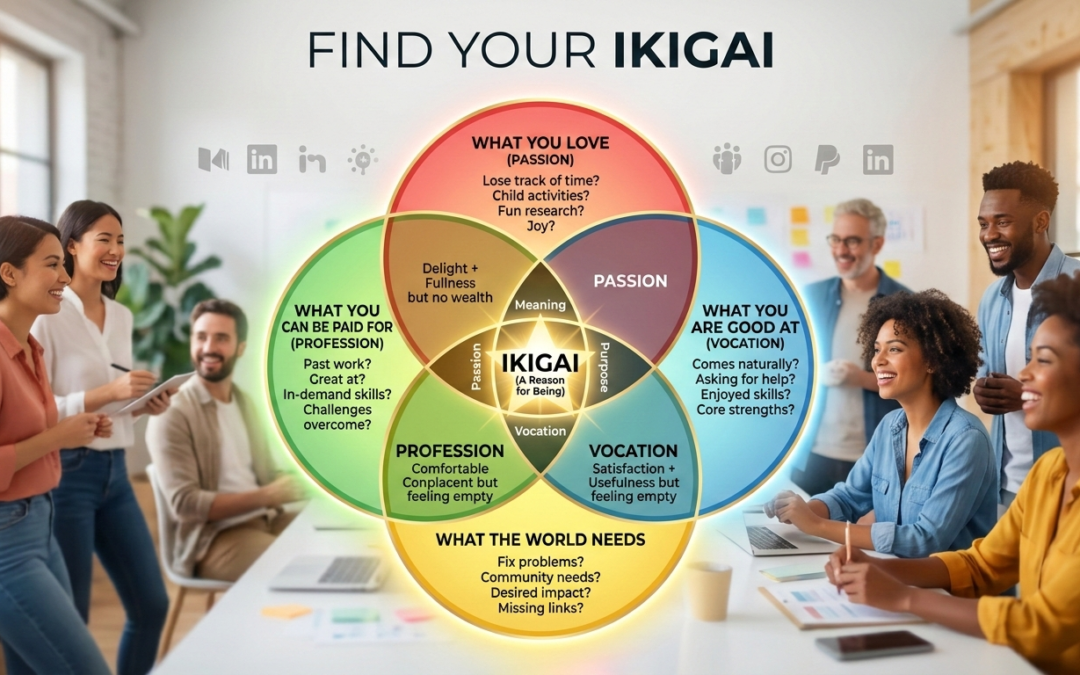
40 Questions to Find Your Center
Finding your Ikigai is easier when you don’t overthink it. Use these numbered questions to balance your “lights” and your “shadows.”
1. What You Love (Passion)
The Fuel
1. What is the first thing you want to do on a completely free day?
2. What topic could you talk about for an hour without any notes?
3. Which activity makes you forget to check your phone or the time?
4. What did you spend your favorite childhood afternoons doing?
5. What kind of books, videos, or podcasts do you naturally choose?
The Opposite (The Drain)
6. What task makes you count down the minutes until it is over?
7. What activity leaves you feeling physically or mentally exhausted?
8. What do you only do because you feel guilty if you don’t?
9. Which popular hobby or trend do you find incredibly boring?
10. What is the one thing you dread doing every single week?
2. What You Are Good At (Vocation)
The Talent
11. What task feels much easier for you than it does for others?
12. What do friends or coworkers always ask you to help them with?
13. What is a skill you learned faster than most people you know?
14. What is the one thing you are most proud of accomplishing?
15. Which part of your daily routine feels like second nature to you?
The Opposite (The Struggle)
16. What common task always makes you feel confused or frustrated?
17. What is a skill you have tried to learn but never “clicked”?
18. What responsibility would you pay someone else to take off your plate?
19. In which area do you feel like you are just “faking it” to get by?
20. What type of work makes you feel like you’re swimming against the current?
3. What the World Needs (Mission)
The Impact
21. What problem in your neighborhood or city makes you want to help?
22. What group of people do you feel the most sympathy for?
23. What is a “gap” or service you wish existed in your community?
24. What kind of positive change do you want to be remembered for?
25. What is the one thing you wish people would stop doing to each other?
The Opposite (The Indifference)
26. What major global issue do you personally find hard to care about?
27. What “helpful” trend do you think is actually a waste of time?
28. Which charity or cause feels like a chore to support?
29. What is a common complaint from others that you find annoying?
30. Where do you feel your efforts to help are totally ignored?
4. What You Can Be Paid For (Profession)
The Reward
31. What is a service you have provided that people thanked you for?
32. What skills do you have that show up in most job descriptions?
33. What is a “pain point” for others that you know how to fix?
34. What have you been paid to do in the past, even if it was small?
35. What is something you do for fun that others pay professionals for?
The Opposite (The Dead End)
36. What is something you love doing that no one would ever pay for?
37. What part of your current job is being replaced by technology?
38. What high-paying career sounds like a total nightmare to you?
39. What is a skill you have that people always expect you to do for free?
40. What kind of work feels like you are trading your soul for a paycheck?
Simple Ways to Discover Your Passion
This was exactly where Marcus sat before he stumbled upon a stained napkin in a campus coffee shop with four overlapping circles drawn on it. He didn’t know it yet, but he was looking at his Ikigai. Fast forward eighteen months: Marcus isn’t just “employed.” He is thriving as a digital strategist, waking up with a physiological “zip” of excitement because his daily tasks hit the sweet spot of his talent and the world’s needs. He didn’t find this by falling into a pit of despair; he found it by asking better questions and deciding to buy career coaching tools that shifted his perspective from a student to a professional.
For today’s college students, the pressure to “figure it out” is at an all-time high, but the good news is that the data shows a path toward fulfillment is more accessible than ever. According to the 2024-2025 Healthy Minds Study, which surveyed over 84,000 students, while rates of anxiety are slowly declining, “flourishing”—defined as psychological well-being marked by purpose—has also dipped slightly to 36%. This suggests that while we are getting better at managing the “downs,” we still need a better roadmap for the “ups.” Finding your Ikigai isn’t just a “feel-good” exercise; it is actually a competitive advantage for your career. Research from Deloitte’s 2025 Gen Z and Millennial Survey reveals that 89% of Gen Z consider a sense of purpose essential to their job satisfaction and well-being. This generation is moving away from the “climb the corporate ladder” mentality and toward a values-first approach that prioritizes mental health over traditional prestige.
Instead of focusing on what’s wrong, you should focus on what’s right because passion isn’t something you find under a rock, but rather something you cultivate through curiosity. One of the simple ways to discover hobbies that might turn into a career is to perform an “energy audit” where you track every activity for a week and mark it with a plus if it gave you energy or a minus if it drained you. This practice helps you look past what you think you should like and focus on what your body actually responds to.
You can also look at your “Childhood Clues” by remembering what you did before the world told you what you should be doing. If you spent hours building Lego empires, you might love structural thinking, or if you were the kid who organized the neighborhood games, your passion might lie in leadership. You should also check your digital history to see what topics you fall down rabbit holes for, because if you are researching how to improve SEO or how to find your passion just because you’re curious about how the internet works, that is a massive clue that your brain is wired for technical problem-solving and market visibility.
Once you know what you love, you have to bridge the gap to what the world will pay you for, which is where most students get stuck. In my How to Land 6-Figure Offers Book, I break down exactly how to turn your internal talents into external value since the market doesn’t pay for your “passion” but rather for the solutions your passion provides. For those looking to enter the business world, understanding how to stand out is key. At World Class Media, we help business owners with dominating their search results, and we see the same patterns in successful students. The ones who rank highest in the job market are those who have aligned their skills with a high-value mission. If you want to see how this works in a professional setting, you can visit the World Class Media official site for digital growth strategies that prove purpose-driven work scales faster than generic marketing efforts.
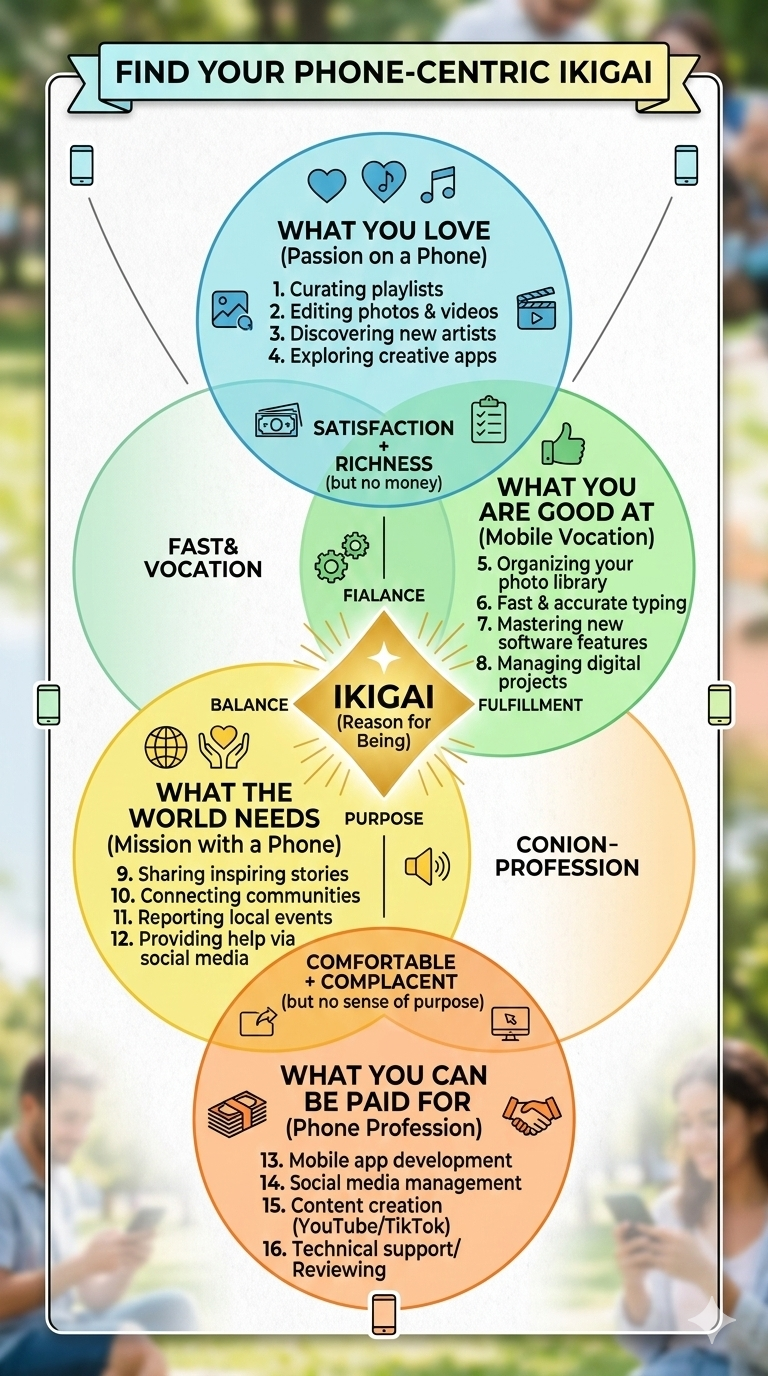
The four circles of the 2026 student require you to ask simple questions. For the first circle, ask yourself what you would do even if you weren’t paid, and then consult an Indeed career advice blog to see how those interests translate to current roles. For the second circle, consider taking the best personality tests for students to validate your strengths. For the third circle, think about what problems in the world make you want to act, and perhaps even donate to social impact causes or look for volunteer opportunities near me to test those waters in a low-stakes environment. Finally, for the fourth circle, you must look at future job market trends 2026 to ensure there is a “starving crowd” for your skill. You can use the LinkedIn job search portal to see which of your skills are currently in high demand and which companies align with your personal ethics.
As you begin to narrow down your focus, you might find it helpful to purchase Ikigai workbook materials or enroll in business strategy course options that help you package your skills. It is also wise to register for career webinar events or look into professional resume writing services to ensure your branding matches your unique value proposition. If you are struggling to see how your specific major fits into the real world, you can search for a How to Land 6-Figure Offers Book summary to get a head start on the frameworks used by top earners. You might also want to check Glassdoor company reviews to ensure the places you apply to actually value the purpose they claim to have. If you need more inspiration, watching a TED Talk purpose in life video can give you the emotional boost needed to keep exploring when the path feels uncertain.
To make the transition from a student to a high-earner, you should proactively find high paying internships that allow you to “test drive” your Ikigai. If you find that you have a knack for the technical side of things, you might even hire SEO expert consultants to learn the trade or look into Google Career Certificates to bolster your credentials. For those who are more academically inclined, Coursera professional development offers paths that align with what is Ikigai and how to apply it. The ultimate goal is to avoid the signs of career burnout before they even start by ensuring your daily work is not just a repetitive task, but a “reason for being.” This is why it is so important to identify career interests early and often, adapting as you grow and as the global market changes around you.
Finding your Ikigai is not about reaching a final destination where the sun always shines, but rather about the daily “reason for getting out of bed.” For a college student in 2026, this means moving past the noise of social media comparisons and looking at the intersection of your unique skills and the very real needs of the world. Whether you are trying to how to land a job after college or you are a business owner looking for help with dominating their search results, the principles remain the same: you must lead with value. If you want to skip the years of trial and error, grab a copy of my How to Land 6-Figure Offers Book to learn the exact frameworks for making yourself indispensable in any economy. Remember that the world doesn’t just need more employees, but it needs people who are alive with purpose and ready to find ways to give back to community in meaningful ways.
What is the one small thing you can do today to move closer to the center of your circles?